
We live in an era of the “perfect trip” culture. Go on any social media, and you will be flooded with well-edited travel reels, a planned itinerary, and idyllically shot content that makes any destination seem like heaven. Instagram’s sunsets and viral travel videos have the modern traveller inundated with an idealised image of how travel must be. Reviews, ratings, and this blog will assist us in creating the perfect experiences, luxury accommodations, and pricey packages that will purport to create lifetime memories.
However, despite all such planning, technology, and information availability, many travellers are left disappointed. After reserving the best hotels, using the best itineraries, and going to trending destinations, something is not right. The difference between expectations and the real experience that came about leaves us with the question: why does travelling with high expectations so frequently end in disappointment?
Travel does not find a solution in the places we have to visit, but in the way we take them. When hopes turn into fixed blueprints instead of soft wishes, the result of disappointment is almost unavoidable. That is where the idea of nature-led stays can provide a nice alternative, a means of resetting the relationship between travel and redefining what it is worth.
The Psychology Behind Travel Disappointment

-
Expectations vs Reality Gap
The travel disappointments phenomenon is rooted in psychology. Whenever we are planning a trip, we build images in our minds of how we expect things to be. We envision an ideal climate, smooth logistics, life-changing experiences and Instagram-worthy scenery around every corner. These expectations can be based on well-edited social media posts, professional travel photography, and carefully selected marketing content that presents only the best.
Reality, however, is messy. Planes arrive late, the weather isn’t what it is supposed to be, the most famous opinions are flooded, and that small but good cafe is shut down on the day you come. The more we are out of our mental map by the experience, the more we are disappointed. This is true even in circumstances where, objectively, we would have found the trip very good.
-
Cognitive Overload and Comparison Fatigue
Modern travellers face an unprecedented level of cognitive overload while travelling. We are in a state of unceasing comparison of our experiences and the ones we have seen online; we are reviewing in real-time, we are capturing every moment to share it on social media, and we are marking boxes on our itineraries. This leads to a form of comparison fatigue, where we never seem to be in the present moment because we are too busy assessing whether it is as good as we thought or how it will be judged by others.
There is also the stress of having an experience that is worth sharing. We are relying on our social media attractiveness to see destinations as opposed to enjoying them. Did we get the perfect shot? Will this make a good story? These queries distract us from the real experience of the location and the individuals surrounding us.
-
Why Even “Great Trips” Feel Underwhelming
Perhaps it is the most disturbing when the objectively great trips do not make us feel full. This is because we have conditioned ourselves to seek external validation and preset standards of success rather than internal fulfilment. We pursue experiences because they are attractions we must see, not because we have an interest in them. We adhere to itineraries because they are trendy, not because they align with our real intentions.
Also, there could be the problem of travel burnout, which is a physical and mental exhaustion from the pervasive stimulation and stress of contemporary travel that might turn even beautiful times into a compulsion instead of enjoyment. We have less ability to experience true joy and wonder when we are burned out, however fantastic the destination.
What Are Nature-Led Stays?

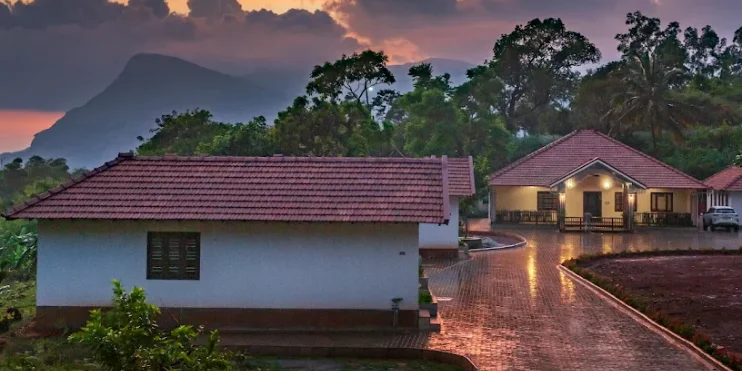
In contrast to traditional resorts, which provide nature as a service, an overview of nature through your balcony, or a garden to walk in, nature-led stays put you fully into the natural environments. Vanaba Hillview, nestled in the Western Ghats of Karnataka, exemplifies this approach. The name itself comes from “Vana” (forest) and “Naba” (sky), reflecting the intimate connection between the natural landscape and the guest experience.
The difference is profound. Traditional resorts focus on comfort, luxury and reliability. Nature-led stays are all about calm, openness, and sensibility. They make you conscious of such things: the mists of the dawn as they sweep across the valleys, the fragrance of the damp soil where it has been wetened by rain, the noise of the evening crickets, the feel of cool mountain air upon your skin. These are not add-ons or attractions; they are the experience.
How Nature-Led Stays Reset the Travel Experience

-
Embracing Imperfection
The nature of nature-led stays is among the most liberating, as it is unpredictable. You cannot know when the mist is coming in or even be assured of the view of the sunset. It is a changeable weather in the Western Ghats, at times it rains, at times there are clouds in the distance and obscure the mountains, and sometimes the sun peeps through in an unexpected flash of glory.
This uncertainty is, in fact, a blessing. It also instructs us to be content with being imperfect and see beauty in everything that occurs. In such destinations as Vanaba, the experience is not based on ideal conditions. A foggy morning is quite magical; rain produces another sort of calmness. By dropping holds on our inflexible expectations as to how things ought to be, we become open to valuing how things are.
-
Mindful Presence
Nature is very powerful in making us present in the present moment. When you are in a place with thick woods, hilly valleys and mountainous scenery, you find your thoughts are not focused on the conversations inside, but the landscape outside. The continual stimulation of notifications, comparisons and mental checklists becomes a background.
Mindful travel experiences in nature encourage a slower pace. You can spend a whole morning sitting on a balcony, having a view of mist drifting above coffee plantations, instead of rushing from one attraction to another. You see little things: how the leaves fall, how the various songs of birds sound, how light varies all day long. It is this aspect of attention, concentration without haste, without concealment, and having the sincere curiosity behind it, that is the remedy of cognitive overload.
-
Reduced External Pressure
In the case of nature-led stays, social media travel pressure is diffused. Being truly immersed in what you see around you, and feeling the cool air of the mountains, savouring the homemade Malnad food, hearing the forest at night, the feeling of the necessity to capture all of this to share with other people subsides. You do not go there to get something but to experience something.
Instagram-perfectionism and luxurious hotels are not the promises Vanaba makes. It promises authenticity. The Malnad architecture, the simple furniture, and the spaces, which are themed after local ones, are not meant to impress others; rather, they are meant to make you feel connected to the place. This is a massive transformation of external validation to internal satisfaction.
-
Intrinsic Rewards
Specifically, travel burnout recovery can be helped by re-finding an intrinsic motivation, the ability to do things because they bring true joy, not because they are a requirement or because they are impressive. The nature-led stays make it easy by providing basic indulgences: a hot cup of coffee in the middle of the plants, the deep sleep of mountain air and silence, chatting by the bonfire, and strolling through the coffee fields without having any destination in mind.
Such experiences are not well documented, and it is difficult to explain them to others. And yet they are very gratifying. They teach us that the most significant experiences in travelling are not necessarily the big and dramatic moments, but sometimes they are the not-so-dramatic ones, when we are absolutely at home.
-
Resetting Perspective
Perhaps most importantly, mindful travel in the Western Ghats or similar natural settings helps reset our entire perspective on what constitutes a “successful trip.” It is not how many attractions you have visited, how many photos you have taken, or how similar the reality was to your itinerary that can define success. It occurs by the way you had felt, what you had observed and what you had altered.
When you come back after a nature-led stay, you bring back not memories but a recalibrated nervous system, a re-established presence capacity and a reminder that you do not need perfection to be happy.
Why Choose Vanaba for a Nature-Led Stay

The place of consideration is well considered in the provision of accommodation in Vanaba. The outside is embraced by traditional cottages with wooden interiors and open verandas. You do not wake to alarm clocks but to the singing of birds. You do not dine in formal dining rooms but in rooms where the mist-covered valleys can be seen. The swimming pool, gardens, and walking paths are inseparable from nature as they are merged with nature.
Conclusion
We stand at an interesting crossroads in travel culture. We have never accessed better destinations, information and well-edited travel inspiration as we are today. However, no traveller has ever mentioned before that he or she felt disappointed, overwhelmed, or disconnected with anything they encountered. It is not the travelling, but the way we have become accustomed to doing it.
One way towards this change is through nature-led stays. They give the room, silence, and fullness of the senses that we so need to re-tune. They teach us that the best travel experiences are those that cannot be planned or anticipated; they come when we are available, present, and willing to accept a place on its terms. Visit Vanaba Hillview or contact us and discover how nature-led stays can transform your relationship with travel.


